On Grief
November, 2011
Some years ago I wrote a book called Sunlight on the Garden; it was a patchwork history of my family as it sometimes soared, sometimes staggered through the twentieth century, wrestling with wars, dislocation, the English class system, love and loss adventure and also, for some of them, depression. I had myself been treated for depressive psychosis over several months in hospital a quarter of a century ago but had recovered completely and never relapsed, re-emerging as the happy enthusiast I had (mostly) been before but perhaps a bit more robust. The book was, among many other things, a biography of an illness.
I’d enjoyed writing this book, partly because I hoped it revealed that some wit might endure through the historical drama (and, to be frank, melodrama) of family life even in hard times. But what I’d liked most of all at was exploring the collision of history and personality and near the end of the memoir I said, triumphantly, that despite everything, we were a family of survivors. Despite everything, no-one in my family, I wrote, had killed themselves.
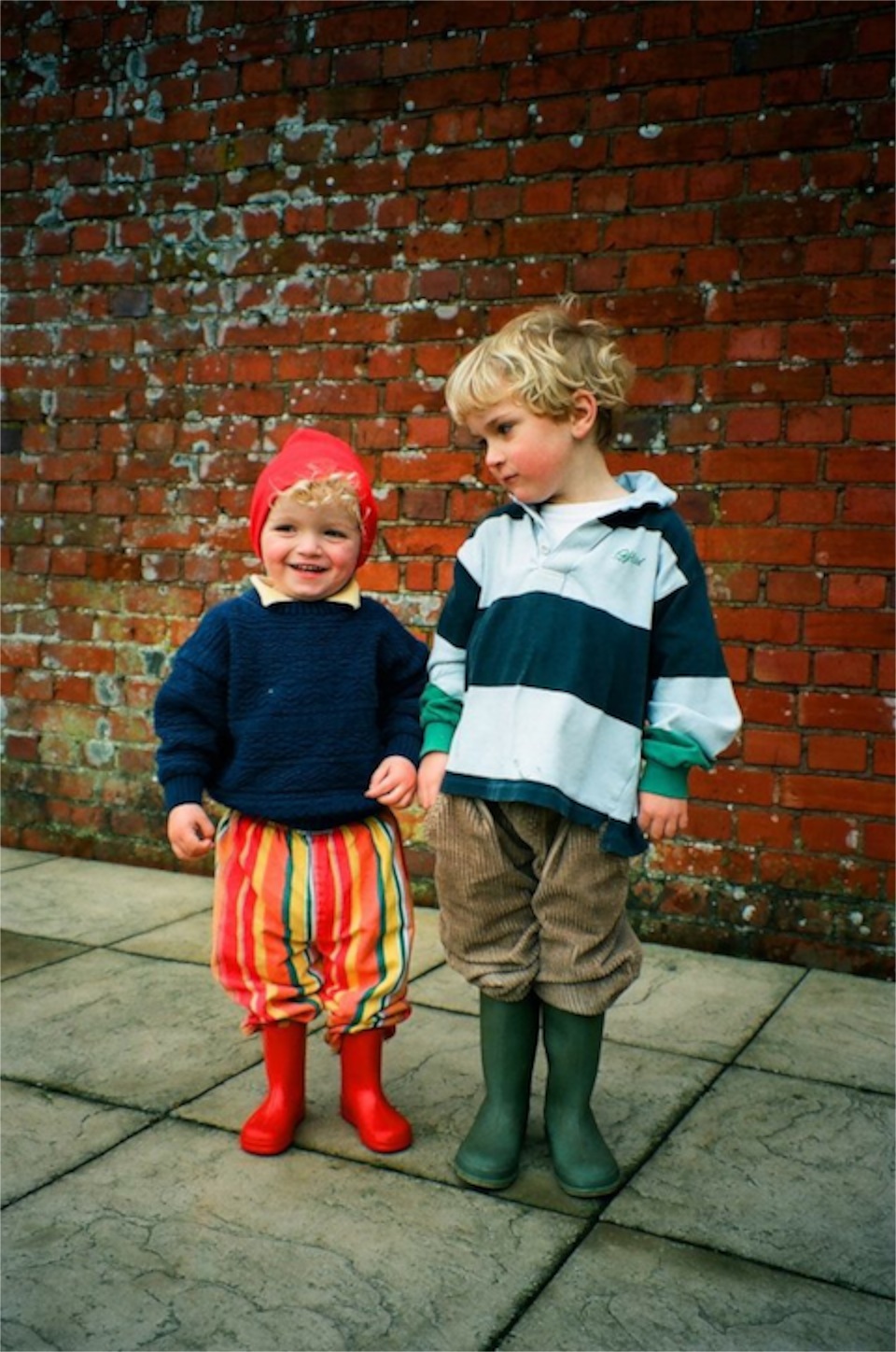
My much more recent novel The Return of Captain John Emmett, set just after the First World War, dealt with a fictional suicide at a time when it was illegal (the law was only changed in 1961) and a terrible disgrace. I dedicated this, my first novel, to my nephews, rejoicing that they were of a generation who, unlike those in my story, and in the first half of the twentieth century, would never be called upon to die or kill for their country. Ours was, I implied, a fortunate age. A safe one.
I now find myself trying to make sense of the death of one of those nephews and of the lethal potential of depression. My nephew was a boy, a young man of twenty-one, good at photography, a kind instructor for scuba divers, a son, brother, grandson, nephew, cousin, friend: someone who belonged to us and he killed himself seven weeks ago on the rocky journey from youth to manhood. The implicit family compact - our belief that we knew about depression: we understood it, could beat it or live with it or support someone who had it, has been broken. What I wrote about in a memoir and then explored as fiction is now my reality.
The impact is threefold: the loss of the hope and then the life of a gentle, quiet young man, who was desperately unhappy and, he believed, alone after the breakdown of a relationship. The terrible pain in watching his parents - simply a warm, loving couple who were doing their best, as well as his three brothers, bewildered and flattened by grief. Their lives, their hopes certainly, in a way, lost too. The rituals of administration contingent on sudden death; the police at the door, inquest, identification, post-mortem are so familiar from television, so shockingly unknown in reality.
But then there was the blow to our collective idea of ourselves as a family. In my case I carried with me the sense of being part of a good one: largish, spread over four generations, bright, emotionally articulate, eccentric at times, close, supportive, but not in each other’s pockets. Families are organic – they grow and change: members are gained, some surprisingly recognisable from birth, some arriving as wonderful strangers, while, as the years turn, some are lost. The family I was born into – as the first of a new generation – its broad ways, traits, stories and beliefs, has a recognisable, character even though most of its members alive then are dead now. But if one can, although with difficulty, accept that death may occur in the wrong order: the child before the parent from accident or illness (my mother died in her early 60’s, my step-sister in her early 40’s) it was unthinkable that any member, loved and important to the whole, would want to leave it. To carefully and methodically obliterate themselves. Nor that those left could bear it.
But it is borne, of course. Choice is gone. My nephew, in intolerable circumstances, found a permanent solution for what we believe was a temporary problem. In so doing he created a different permanent problem. I still wait for the famous stages of grief but they stay away . Even the shadow of denial never fell across my path from that first, shocking, phone call as I sat in pouring rain waiting for my plane to taxi down a runway in Greece. Guilt is elusive and I have not yet arrived at anger, even by concentrating on the hospital that lifted the compulsory detention order taken out by another unit on the grounds that my nephew was at risk of suicide, and released him to kill himself. I’m just diminished and sad. I hope this is the greatest sadness I shall ever know.
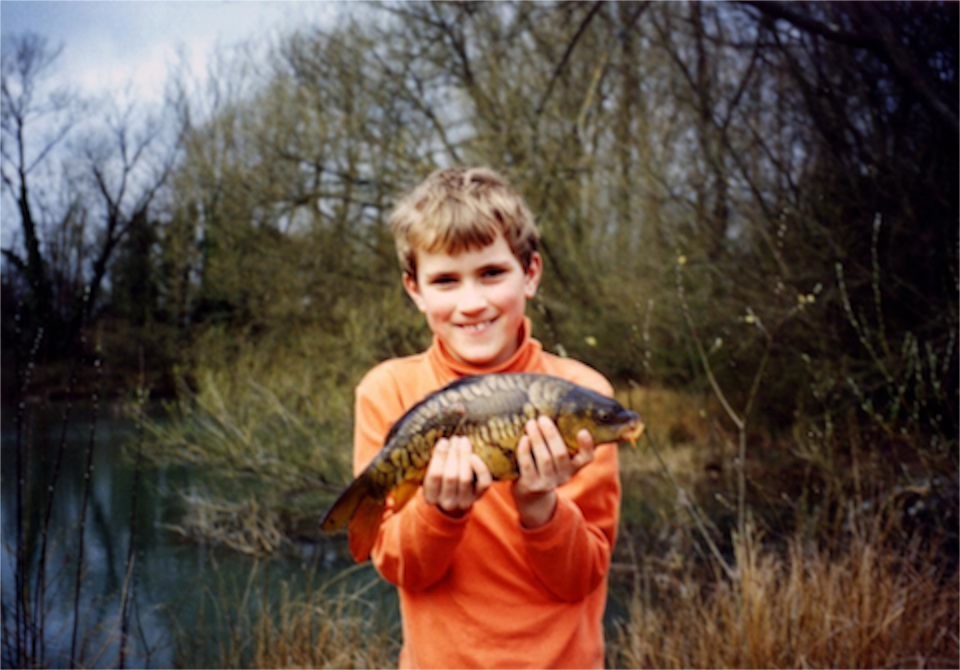
For the first month I just cried, every day, sometimes a very little, sometimes almost incessantly. At first, every day, I cycled through normality, even bright productivity, to tearful bursts of emotion, to a physical ache, an intense wish that it wasn’t true, to, perhaps above all, anxiety with a world exposed as more dangerous, more arbitrary than any of us want to accept. By the time the crying had mostly stopped, I was exhausted. Family patterns re-emerged: my father, in his 80’s and physically frail, became a rock for his middle-aged children. I felt (selfishly) inadequate and frightened at being unable to make it better for my younger brother in the bleak place he found himself in as a father who had lost his boy in such tragic circumstances, or my much younger, former Pollyanna of a sister.
I told near strangers, all surprisingly sympathetic, yet had a powerful instinct to protect my children from my unhappiness, although they are all adult now and share it. I am foolishly afraid of alienating friends, who have been nothing but kind, by my inability to be amusing, by my lability; a fear that by being emotionally demanding, those who matter to me more than ever now, will back away. How long is one allowed to talk about this all-consuming event they cannot share? Weeks? Months? A lifetime? Grief, superficially bonding, is ultimately a lonely place to be. The roots of this are, I think, deep in my own long ago experience of depression and people’s reaction to it and also, to a degree, a product of my career as a writer - where a narrative, however melancholy, must have shape and must entertain. In reality, suicide creates chaos. He is a part of our memories, our anecdotes, our photographs, our family calendar, our sense of the absolute. Where I am now, where we all are, has no shape; the characters are in jeopardy, they are all changing, yet it is unclear how the situation will proceed. There is no plot. No trajectory. No resolution.
Yet were I to re-write either of my two books which talked of suicide without knowing it at close hand, I would alter nothing. We are born, most of us, in a fortunate age, we expect our children to be safe, and fiction is one way in which we can explore emotional pain, the random assaults of fate and the not quite unthinkable. For, as my brother said at his son’s funeral: ‘we have hundreds of letters from friends saying they can’t imagine what’s it’s like; but you can, of course you can.’
On the eve of his cremation, my nephew’s coffin stood in the ancient Lady Chapel of a local church, the body we had known just a sliver of pale beech away from touch. Friends came and went, the bright warm day lit up the stained glass, turned to dusk, then night. Outside, darkness, inside candles flickered, music played. The tracks were chosen by my nephew on a list left as part of his immaculate planning for death: “I can’t make you love me”, “Hey there, Delilah” - songs chosen, we saw, from a CD called “The Very Best of Sad Songs” - even at the darkest times there are fragments of humour. Some wept, some talked, some sat in silence. And, by coincidence, his coffin stood beside the carved wooden memorial to the dead of two world wars. Columns of young men his age who wanted to live, whose lives I had echoed in fiction. But there was no irony there. Around us the ghosts of other bereaved parents kept us company. To have children is to be a hostage to fortune and we accept that gladly, if unaware of what that might mean, at the start. It will, we believe, never be us.
In Sunlight on the Garden, I explored a 100-year story of rumbustious and colourful family life and within it my own fortune in recovering so completely from one far distant episode of mental illness. The structure of this memoir was a matter of half-connected fragments; memories, myths, ghosts, shadows. I now know that is the only form appropriate to explaining mental illness – and its most lethal outcome, suicide. The act drops a stone in the middle of an ocean and ripples move outwards to an invisible and very distant shore. They still move with all the unpredictability of the changeable and unknown.
As for suffering – it comes in many forms. Any of us, suddenly bereaved of somebody very young, who we loved, are also bereaved of the people we all were before and will not, I think, ever quite be again.
In April this year, my brother, Barney’s father, will give a talk at TedEx 2015 on adolescent mental health, challenges to how we handle it and something of his own journey through the last three and a half years, including his involvement in training others to put strategies in place to deal with mental illness. We, our remaining family, are all here. We are, I’d say, I good shape. My brother and Barney’s mother moved from deep countryside to London, my sister in law is a teacher at a girls’ secondary school. My father is 90. Barney would have become an uncle last year. We laugh, we have fun, we make plans, we talk about Barney.
His family has survived. But not all do and once a member of your family has killed himself you learn so much you never knew: you discover how many people in your circle have shared these experiences –there is still some stigma, it seems, in talking about it and then the statistics, particularly on male depression and suicide under the age of 25. These are appalling. There is no other word for it – it is the principal cause of death in this age group - and society needs to look hard at why and how death seems so much easier than life for so many of our young men and how we can pre-empt their fatal decision.
Two charities worth supporting are MIND, and the Charlie Waller Memorial Trust, set up in memory of another young man who killed himself.
.
I’d enjoyed writing this book, partly because I hoped it revealed that some wit might endure through the historical drama (and, to be frank, melodrama) of family life even in hard times. But what I’d liked most of all at was exploring the collision of history and personality and near the end of the memoir I said, triumphantly, that despite everything, we were a family of survivors. Despite everything, no-one in my family, I wrote, had killed themselves.
My much more recent novel The Return of Captain John Emmett, set just after the First World War, dealt with a fictional suicide at a time when it was illegal (the law was only changed in 1961) and a terrible disgrace. I dedicated this, my first novel, to my nephews, rejoicing that they were of a generation who, unlike those in my story, and in the first half of the twentieth century, would never be called upon to die or kill for their country. Ours was, I implied, a fortunate age. A safe one.
I now find myself trying to make sense of the death of one of those nephews and of the lethal potential of depression. My nephew was a boy, a young man of twenty-one, good at photography, a kind instructor for scuba divers, a son, brother, grandson, nephew, cousin, friend: someone who belonged to us and he killed himself seven weeks ago on the rocky journey from youth to manhood. The implicit family compact - our belief that we knew about depression: we understood it, could beat it or live with it or support someone who had it, has been broken. What I wrote about in a memoir and then explored as fiction is now my reality.
The impact is threefold: the loss of the hope and then the life of a gentle, quiet young man, who was desperately unhappy and, he believed, alone after the breakdown of a relationship. The terrible pain in watching his parents - simply a warm, loving couple who were doing their best, as well as his three brothers, bewildered and flattened by grief. Their lives, their hopes certainly, in a way, lost too. The rituals of administration contingent on sudden death; the police at the door, inquest, identification, post-mortem are so familiar from television, so shockingly unknown in reality.
But then there was the blow to our collective idea of ourselves as a family. In my case I carried with me the sense of being part of a good one: largish, spread over four generations, bright, emotionally articulate, eccentric at times, close, supportive, but not in each other’s pockets. Families are organic – they grow and change: members are gained, some surprisingly recognisable from birth, some arriving as wonderful strangers, while, as the years turn, some are lost. The family I was born into – as the first of a new generation – its broad ways, traits, stories and beliefs, has a recognisable, character even though most of its members alive then are dead now. But if one can, although with difficulty, accept that death may occur in the wrong order: the child before the parent from accident or illness (my mother died in her early 60’s, my step-sister in her early 40’s) it was unthinkable that any member, loved and important to the whole, would want to leave it. To carefully and methodically obliterate themselves. Nor that those left could bear it.
But it is borne, of course. Choice is gone. My nephew, in intolerable circumstances, found a permanent solution for what we believe was a temporary problem. In so doing he created a different permanent problem. I still wait for the famous stages of grief but they stay away . Even the shadow of denial never fell across my path from that first, shocking, phone call as I sat in pouring rain waiting for my plane to taxi down a runway in Greece. Guilt is elusive and I have not yet arrived at anger, even by concentrating on the hospital that lifted the compulsory detention order taken out by another unit on the grounds that my nephew was at risk of suicide, and released him to kill himself. I’m just diminished and sad. I hope this is the greatest sadness I shall ever know.
For the first month I just cried, every day, sometimes a very little, sometimes almost incessantly. At first, every day, I cycled through normality, even bright productivity, to tearful bursts of emotion, to a physical ache, an intense wish that it wasn’t true, to, perhaps above all, anxiety with a world exposed as more dangerous, more arbitrary than any of us want to accept. By the time the crying had mostly stopped, I was exhausted. Family patterns re-emerged: my father, in his 80’s and physically frail, became a rock for his middle-aged children. I felt (selfishly) inadequate and frightened at being unable to make it better for my younger brother in the bleak place he found himself in as a father who had lost his boy in such tragic circumstances, or my much younger, former Pollyanna of a sister.
I told near strangers, all surprisingly sympathetic, yet had a powerful instinct to protect my children from my unhappiness, although they are all adult now and share it. I am foolishly afraid of alienating friends, who have been nothing but kind, by my inability to be amusing, by my lability; a fear that by being emotionally demanding, those who matter to me more than ever now, will back away. How long is one allowed to talk about this all-consuming event they cannot share? Weeks? Months? A lifetime? Grief, superficially bonding, is ultimately a lonely place to be. The roots of this are, I think, deep in my own long ago experience of depression and people’s reaction to it and also, to a degree, a product of my career as a writer - where a narrative, however melancholy, must have shape and must entertain. In reality, suicide creates chaos. He is a part of our memories, our anecdotes, our photographs, our family calendar, our sense of the absolute. Where I am now, where we all are, has no shape; the characters are in jeopardy, they are all changing, yet it is unclear how the situation will proceed. There is no plot. No trajectory. No resolution.
Yet were I to re-write either of my two books which talked of suicide without knowing it at close hand, I would alter nothing. We are born, most of us, in a fortunate age, we expect our children to be safe, and fiction is one way in which we can explore emotional pain, the random assaults of fate and the not quite unthinkable. For, as my brother said at his son’s funeral: ‘we have hundreds of letters from friends saying they can’t imagine what’s it’s like; but you can, of course you can.’
On the eve of his cremation, my nephew’s coffin stood in the ancient Lady Chapel of a local church, the body we had known just a sliver of pale beech away from touch. Friends came and went, the bright warm day lit up the stained glass, turned to dusk, then night. Outside, darkness, inside candles flickered, music played. The tracks were chosen by my nephew on a list left as part of his immaculate planning for death: “I can’t make you love me”, “Hey there, Delilah” - songs chosen, we saw, from a CD called “The Very Best of Sad Songs” - even at the darkest times there are fragments of humour. Some wept, some talked, some sat in silence. And, by coincidence, his coffin stood beside the carved wooden memorial to the dead of two world wars. Columns of young men his age who wanted to live, whose lives I had echoed in fiction. But there was no irony there. Around us the ghosts of other bereaved parents kept us company. To have children is to be a hostage to fortune and we accept that gladly, if unaware of what that might mean, at the start. It will, we believe, never be us.
In Sunlight on the Garden, I explored a 100-year story of rumbustious and colourful family life and within it my own fortune in recovering so completely from one far distant episode of mental illness. The structure of this memoir was a matter of half-connected fragments; memories, myths, ghosts, shadows. I now know that is the only form appropriate to explaining mental illness – and its most lethal outcome, suicide. The act drops a stone in the middle of an ocean and ripples move outwards to an invisible and very distant shore. They still move with all the unpredictability of the changeable and unknown.
As for suffering – it comes in many forms. Any of us, suddenly bereaved of somebody very young, who we loved, are also bereaved of the people we all were before and will not, I think, ever quite be again.
Three years later. 2015:
In April this year, my brother, Barney’s father, will give a talk at TedEx 2015 on adolescent mental health, challenges to how we handle it and something of his own journey through the last three and a half years, including his involvement in training others to put strategies in place to deal with mental illness. We, our remaining family, are all here. We are, I’d say, I good shape. My brother and Barney’s mother moved from deep countryside to London, my sister in law is a teacher at a girls’ secondary school. My father is 90. Barney would have become an uncle last year. We laugh, we have fun, we make plans, we talk about Barney.
His family has survived. But not all do and once a member of your family has killed himself you learn so much you never knew: you discover how many people in your circle have shared these experiences –there is still some stigma, it seems, in talking about it and then the statistics, particularly on male depression and suicide under the age of 25. These are appalling. There is no other word for it – it is the principal cause of death in this age group - and society needs to look hard at why and how death seems so much easier than life for so many of our young men and how we can pre-empt their fatal decision.
Two charities worth supporting are MIND, and the Charlie Waller Memorial Trust, set up in memory of another young man who killed himself.
.
blog comments powered by Disqus